UPSC Mains 2024 · 10 marks
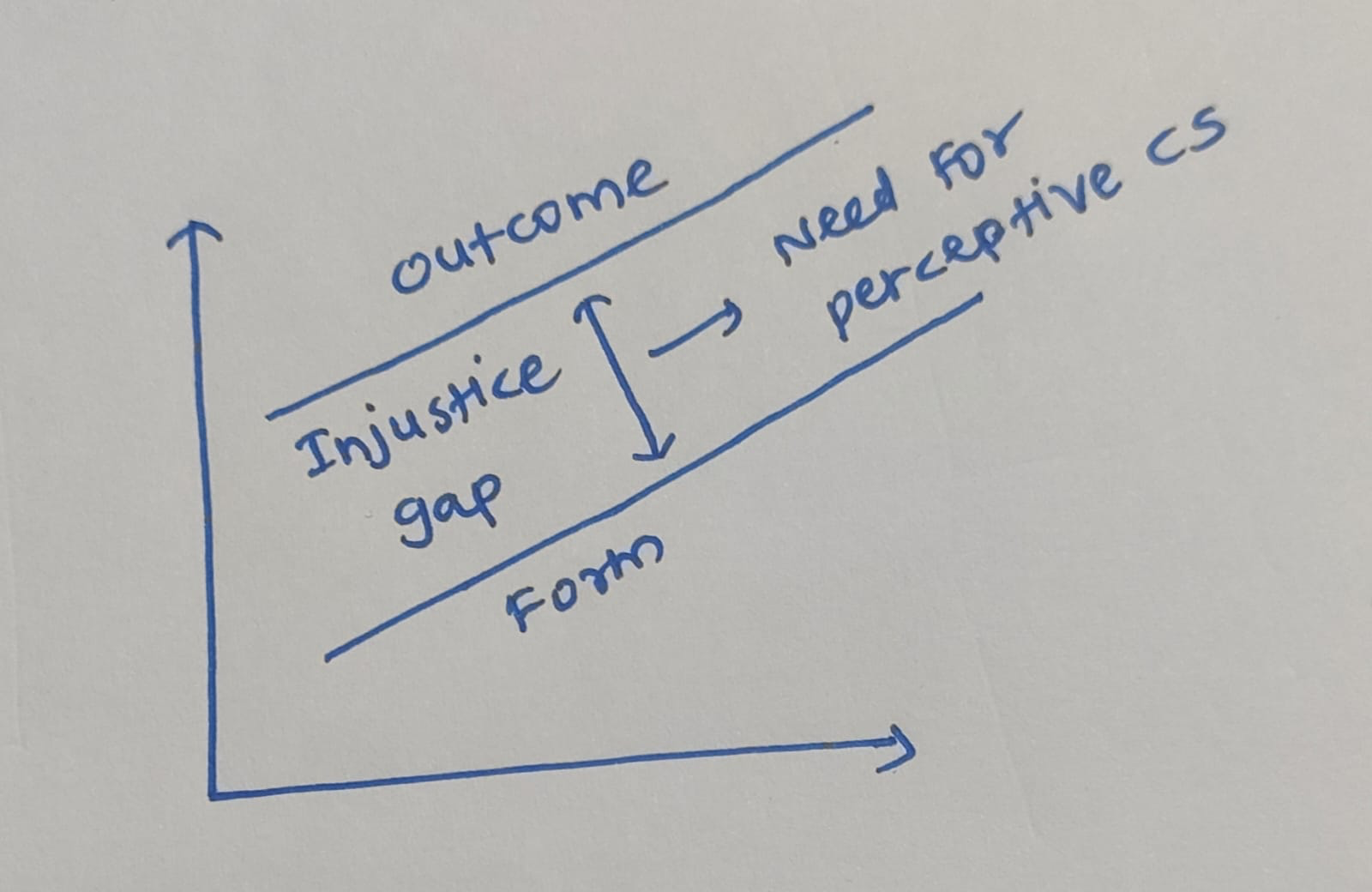
Mindless addiction to Form, ignoring the Substance of the matter, results in rendering of injustice. A perceptive civil servant is one who ignores such literalness and carries out true intent. Examine the above statement with suitable illustrations.
In public administration, there is tension between procedural formalism and substantive justice. When it becomes a slave to "Form," it becomes an end in itself, at the cost of the citizen it was meant to serve.
Mindless Addiction to Form- Rendering Injustice
Institutionalization of Red Tapism- Eg- Munger-Ganga Bridge in Bihar was delayed by nearly 14 years due to inter-departmental disputes
Literalness breeds a "mechanical" mindset where officials lose empathy. Eg- denial of emergency care to critically ill patient without documentation
Inefficiency in crisis management- Eg- migrant labour sufferings during COVID.
Undermining Rights of the Vulnerable- Eg- PDS exclusion of poor due to biometric authentication failures (Jharkhand case)
Encourages moral abdication - Officials transfer moral responsibility to the rulebook (banality of evil). Eg- encroachment demolitions without rehabilitation plan.
Facilitates coercive corruption. Eg- ‘speed money’ for faster file clearance
Complexity of the "Form" leads to Process becoming Punishment. Eg- complexity in environmental clearances
"By-the-book" culture stifles innovation and creativity.
Resource Wastage- Eg- cost and time overruns in PPP projects due to delays in land procurement
Policy Paralysis- Fear of audit or the "3C" (CBI, CVC, CAG) leads to "Defensive Bureaucracy."
The Perceptive Civil Servant- Carrying Out True Intent
Proactive Problem-Solving in emergencies- Eg- Dr. Rajendra Bharud (IAS) setting up an oxygen plant in tribal Nandurbar before the second COVID wave
Empowering through Informal Networks- Eg- Armstrong Pame (IAS) built a 100km road via crowdfunding.
Administrative Empathy for the Marginalized- Eg- In the "Project Sulaimani" model (Kozhikode), the "Substance" of dignity was prioritized.
Reforming through Discretion- Eg- Kiran Bedi (IPS) turned Tihar Jail into a reformatory.
Streamlining Processes for the Citizen- Perceptive officers redesign the "Form" itself. DM of Ganjam (Vijay Kulange) institutionalized "Doorstep Delivery" of pensions for the disabled
Innovative problem solving- Eg- Rahul Kumar (IAS) converted abandoned buildings into libraries using maintenance funds.
Defending the Rights of the Voiceless- Eg- S. Sankaran (IAS) provided instant subsistence relief to rescued bonded laborers.
Rules are meant to serve justice and when they fail to do so, conscience must guide discretion.
Syllabus topic
GS4-03.Attitude: Content, Structure, Function; its Influence and Relation with Thought and Behaviour; Moral and Political Attitudes; Social Influence and Persuasion.